Location
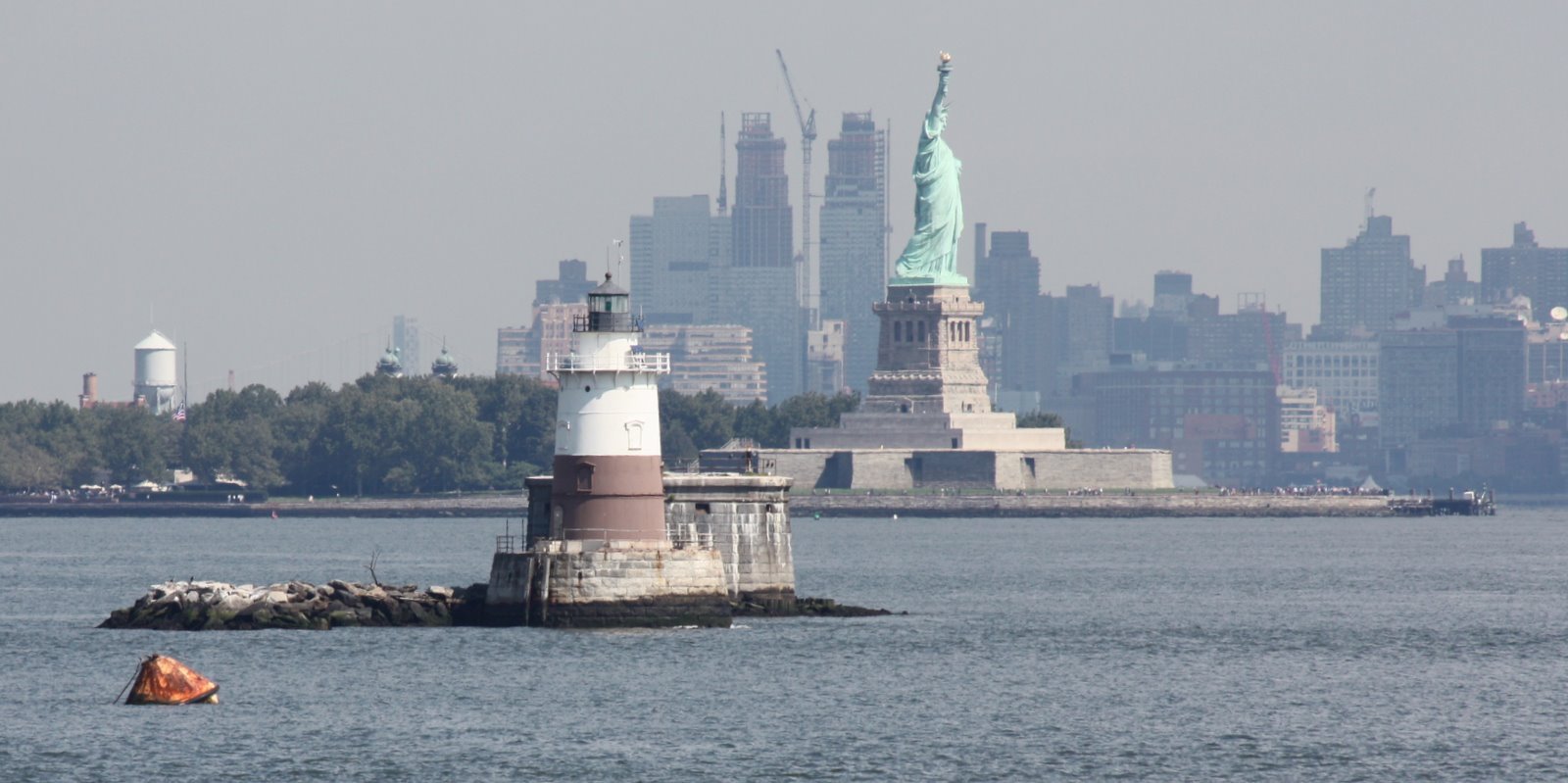
Robbins Reef Lighthouse was built in 1838 on a rocky reef in New York Harbor where the Kill van Kull, the Hudson River, and New York Bay converge. Early Dutch mariners named it “robbins,” the Dutch word for seals who rested on the reef on their migrations north and south. In 1966 its keeper was replaced by an active, solar-powered light, which flashes every six seconds at night and in bad weather. But from 1839 until then, its keeper, equipped with lanterns and a rescue dory, was critical to safe passage though the turbulent waters around the lighthouse.
History
The lighthouse’s first keeper, Isaac Johnson, first lit the lamps in 1839. Late in 1885 Civil War veteran John Walker was appointed keeper, and with his wife Katherine, their daughter Mae, who was born shortly after their arrival, and Kate’s son Jacob, he moved to the light, where Kate made a beautifully-appointed home. But five years later John died, and Kate, a diminutive figure standing 4’10,” was named keeper because no one else wanted the job. She watched over the Harbor for thirty-three years, witnessing and reporting shipwrecks and disappearances, rescuing people and their vessels, and maintaining the eight lamps, siren, and foghorn. When snow or ice obscured the light gallery windows, she climbed out to the narrow deck around it to clear them.
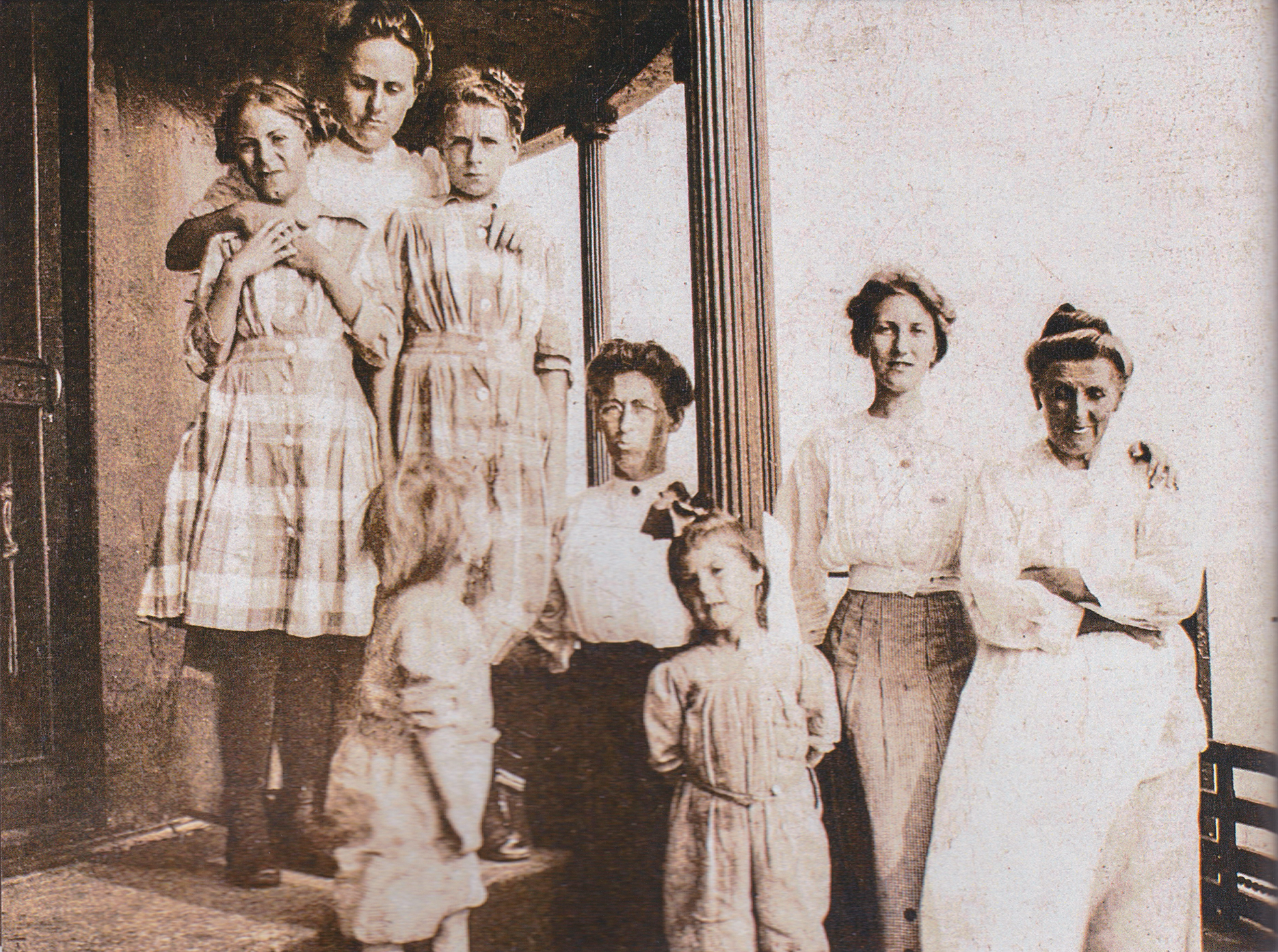
The Walker Family with their friend Esther Olsson on the Promenade deck, circa 1910.Top from left, Alberta, Mae, and Catherine, and, bottom from left, Jacob, Jr., Loretta, Lucille, Esther Olsson, and Kate Walker, lighthouse keeper from 1895-1919. (Walker Family Collection)
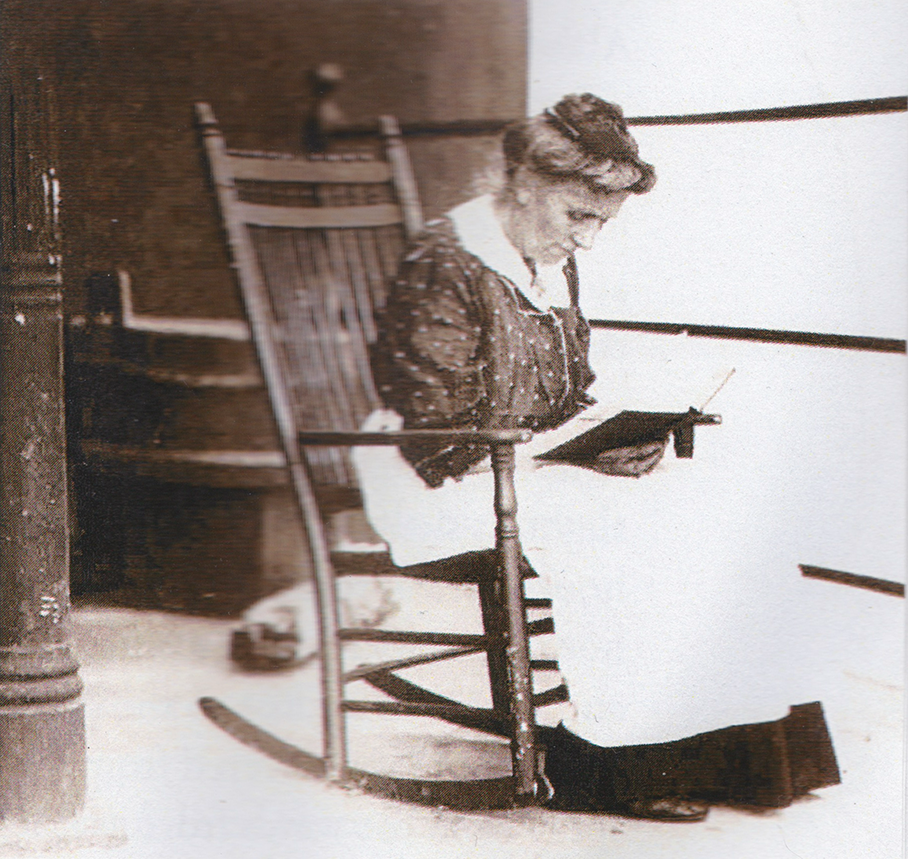
Kate reading in her rocker, circa 1910
(Walker Family Collection)
Though lighthouses did have single woman keepers, Kate was the only woman in this country managing one surrounded by water, at the time when, as John A. Noble said, “New York was the busiest harbor in the world.” Equipped with lanterns, Kate, alone in her 15’ dory rigged at the top of the cassion, lowered it, and rowed off to rescue people and save stranded vessels.
In good weather Kate rowed her children to and from school on Staten Island. In addition to parenting and the lighthouse schedule and duties, she kept her home, corresponded, reported her activities, listened to music on her phonograph under the canopy in her rocking chair, and read books delivered periodically from the “library ship.” Between periods of solitude, she looked forward to visits from her friends on Staten Island. Gatherings out at the light brought conversation, laughter, and news—to contrast with her quiet vigil and give it balance.
After Kate retired, lighthouse keepers, some with families, took over, and later Coast Guard crews of three lived there until 1966, when they sealed the windows with plywood and sheet metal, powered the light with solar energy, and began regular visits to check on the tower. In 2010, the government de-accessioned the lighthouse and offered it to not-for-profit groups. The Noble Maritime Museum bought the lighthouse for $1 and in 2021 the Noble Collection passed the lighthouse onto the newly formed Robbins Reef Lighthouse Foundation which continues to own it to this day and is in the process of restoring it. One day soon, this little gem of New York Harbor will be open for visitors.
Kate’s Crew
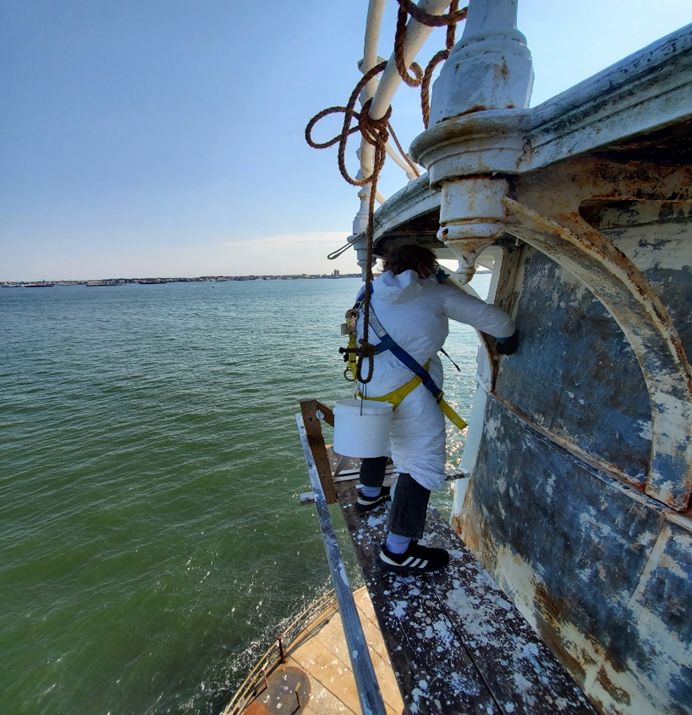
In 2009 the government granted the deed to the lighthouse to volunteers who formed the Robbins Reef Lighthouse Foundation, dedicated to recognizing and restoring the venerable tower. “Kate’s Crew”—carpenters, painters, masons, housekeepers, and technicians—donated their skills.
The crew unsealed the mold-ridden interior and, donning Tyvek suits, began the cleaning process. With generous donations of materials, and transport provided by Miller's Launch, the crew attached a metal platform and a ladder to the caisson for access. They then restored the original windows and doors, and painted the interior. Work on the exterior is underway.
Miller’s Launch transports materials and crews of six. Armorica Sales donates all of the paint.